Understanding the signs early is the first step towards giving children the support they need.
Autism affects how a person communicates, interacts socially and experiences the world around them. While awareness has grown over the years, many parents still struggle to recognise the early signs, navigate the diagnostic process and access timely support.
To better understand these challenges, we sat with Dr. Charlene Marie Samuel, Clinical Director of ABC (Autism Behavioral Center) and Speech Academy Asia to chat about recognising the early signs of autism, why early intervention matters, the realities families face after diagnosis, and what Malaysia can do to build a more supportive system for autistic children and their families.
1Twenty80: What are the early signs of autism in babies?
Dr. Charlene Marie: You don’t necessarily have to wait until your child is one or two years old before noticing signs. Some signs of autism can be observed as early as five to seven months. While some signs may overlap with speech delay, autism typically affects three main areas: social interaction, communication, and behaviour.
Here are some of the early signs parents can look out for:
- Limited social interaction and communication
Babies naturally smile back, make eye contact and respond to social games like peek-a-boo. By around 12 to 15 months, many also begin using simple words such as “mama” or “ayah” to communicate. Children with autism may show less social engagement, including reduced responses to facial expressions, limited eye contact, or not consistently using these early words meaningfully. - Not responding to their name or familiar sounds
Most babies begin responding when their name is called or when they hear familiar voices. Children with autism may appear unresponsive even though their hearing is normal. - A baby who is constantly distressed or difficult to soothe
Many parents later recall that their child was ‘a difficult baby’—crying frequently, becoming distressed in new environments or around unfamiliar people, and being hard to comfort. While this alone doesn’t indicate autism, it is something we commonly hear from families. - Delayed speech and communication
One of the biggest differences between autism and isolated speech delay is communication. Children with autism may remain non-verbal even at three, four, five or six years old. Some can sing songs, recite the alphabet or count numbers, but struggle to use language to communicate their needs. - Little or no pointing
Around their first birthday, children usually point to objects they want or find interesting. Children with autism may not point at all. - Hand-leading
Rather than asking verbally or pointing, some children simply take an adult’s hand and lead them to what they want. Children with more significant communication difficulties may not even do this—they may simply cry because they cannot express their needs. - Difficulty understanding instructions
This is one of the ways we distinguish autism from speech delay. A child with speech delay may not speak much, but they generally understand instructions like “Go get your bottle” or “Let’s put on your shoes.” With autism, both expressive language and comprehension may be affected. - Repetitive or self-stimulatory behaviours
These can include hand-flapping, tiptoe walking, humming, pacing, spinning, jumping, or repeatedly saying certain words or phrases. These behaviours vary from child to child and may become more obvious when they are not engaged in activities.
1Twenty80: Does early intervention prevent that?
Dr. Charlene Marie: Early intervention can help reduce them. The way we do that is through skill acquisition. The more skills a child develops, the less you’ll typically see these behaviours.
Take hand-flapping, for example. A child may flap because they don’t yet know how to express excitement or what to do when they’re not engaged. Without the skills to communicate or occupy themselves, they often revert to self-stimulatory behaviours. As adults, we’ve developed different ways to manage downtime. Many autistic children simply haven’t learned those skills yet.
Self-stimulatory behaviours can also be reinforcing because they make the child feel good or help them cope. In a way, we all have our own coping habits. Some people rock gently while sitting, tap their fingers or click a pen when they’re waiting. For autistic individuals, behaviours like hand-flapping may serve a similar purpose—they’re a way of regulating themselves or expressing how they feel.
Again, not every autistic child will display these behaviours, and they can present differently from one child to another. As children develop more skills through intervention, we often see many of these behaviours reduced because they have more appropriate ways to communicate, regulate themselves and interact with the world.
1Twenty80: What usually triggers that realisation that a child needs help?
Dr. Charlene Marie: Teachers are actually some of the best people at picking up developmental differences because they have something parents don’t—they see many children of the same age, in the same environment, receiving the same instructions. They’re able to compare one child against the rest of the class. So when one or two children respond very differently, it stands out. However, many teachers are hesitant to raise these concerns with parents.
Some of the most common signs teachers notice in the classroom include:
- Delayed speech
By around three years old, most children are already speaking in sentences. A child who is still largely non-verbal at this age will naturally stand out. - Difficulty following instructions
The child may not respond to their name, struggle to understand classroom instructions or complete simple tasks. - Difficulty with transitions
A child may become extremely distressed when asked to stop playing and move on to snack time. It can involve rolling on the floor, screaming or repeatedly trying to return to the previous activity. Many autistic children find it difficult to wait or accept that something they enjoy is no longer available. - Repetitive behaviours
Hand-flapping, walking or running in circles, or repetitive sounds or vocalisations. - Limited awareness of danger
This is one of the biggest concerns in school. Some children may wander out of the classroom without understanding the risks involved. This behaviour, known as elopement, can place children at risk of serious accidents – including traffic injuries or drowning.

1Twenty80: Just getting a diagnosis can take months, sometimes longer. What will this delay mean for the child?
Dr. Charlene Marie: Many families first seek help through the public healthcare system, often because of cost. While government services do their best under challenging circumstances, long waiting times can delay not only a diagnosis, but also the start of intervention. When children don’t receive support early, they often enter intervention much later than they should. Some of these children could have had a very different quality of life. They could have been speaking, attending school and functioning much more independently. This is not a criticism of government services, but rather a reflection of the realities they face. There is a shortage of professionals and specialists. They’re doing what they can.
At ABC and Speech Academy, therapy recommendations are based on what we believe will give a child the best chance of making meaningful progress, not simply on what families are willing or able to pay. If a child clinically needs therapy three or four times a week, that’s what we’ll recommend. I could accept the fee, but that’s not ethical. We don’t want families paying for something that we don’t believe will help their child progress.
Is “something better than nothing”?
I acknowledge that not every family has access to intensive therapy, particularly outside the Klang Valley. Sometimes… that’s all families can get. So yes—something is better than nothing. However, therapy alone should never be the only focus. One of the biggest gaps I see is the lack of structured parent training.
Therapy shouldn’t stop when the session ends. Parents should be equipped with practical strategies to continue supporting their child’s development at home. If a family can only afford once a week, we’ll give them homework. We’ll teach them the skills to practise every day. Ultimately, progress comes from consistency rather than where the hours are spent. Either the hours come from us, or they come from you at home, but they have to come from somewhere. It’s less about the money and more about education and partnership.
1Twenty80: What are the biggest gaps in support that families face after diagnosis? Why do they pause after diagnosis?
Dr. Charlene Marie: I think there are a few reasons:
- Acceptance
I’ve met families whose child was diagnosed years ago, but they hoped their child would simply develop the skills on their own. When they come back three or four years later, there are often many reasons (excuses) given for the delay. But honestly, I think it comes down to acceptance. Receiving an autism diagnosis is a reality that many families have to grieve. Like the five stages of grief, denial is often the first stage, followed by emotions like anger. Sometimes, therapists become the target of that frustration. But if the child was diagnosed three years ago and hasn’t received intervention until now… meaningful progress simply doesn’t happen overnight. - Affordability
Through Speech Academy, we work with families from all walks of life because the fees are more affordable. Many genuinely cannot afford intensive therapy, so we do what we can to support them with the resources they have.
1Twenty80: How well are children with autism supported in Malaysia?
Dr. Charlene Marie: There are things we are doing well, but there are also significant gaps that still need to be addressed:
- Financial support is limited
Most of the families we work with are self-paying. Some companies allow parents to claim occupational or speech therapy through their employee benefits, but that’s still the minority. There isn’t a lot of financial support from either the government or private insurance.
If you compare it to countries like the United States, Applied Behavior Analysis (ABA) is recognised as the gold standard for autism intervention and is often covered by insurance. Families don’t have to pay five-figure sums every month for therapy because it’s covered. - Access to care exists—but intensity is another issue
Malaysia does offer developmental screening through Klinik Kesihatan (KK). However, many families either miss these appointments or don’t realise how important they are.
Government therapy services are available, but because of limited resources, appointments may be spaced months apart. If you only go once every three to six months, you probably won’t see the outcomes you hope for. But again, at least there is something. - Schools want to help, but resources vary greatly
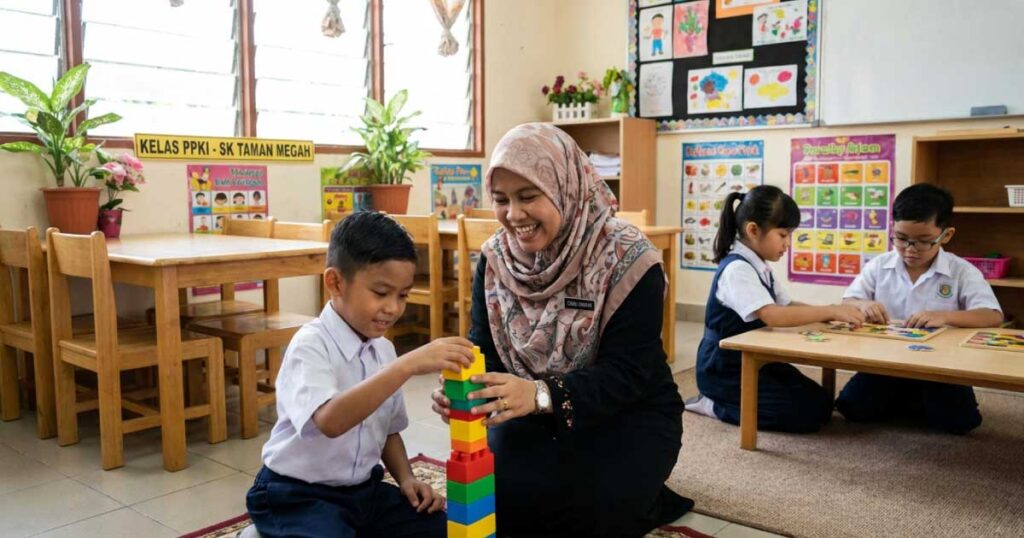
We work mostly with private and international schools because many of them have dedicated learning support or special education units. Government schools with Program Pendidikan Khas Integrasi (PPKI) are also trying their best, and we’ve worked with some incredible PPKI teachers.
However, many PPKI teachers are supporting very large classes with children who have a wide range of different needs—which may include children with autism, speech delay, hearing impairment, global developmental delay and other disabilities in the same classroom. One teacher may be responsible for 20 children with very different learning needs. Honestly, even I couldn’t do that. It’s an incredibly difficult job.
1Twenty80: What would be the optimum meaningful inclusion for autistic children in school, especially in public schools?
Dr. Charlene Marie: I don’t know how feasible it is with the current resources, but if we had the manpower and funding, this is what I think meaningful inclusion should look like:
- Specialised support within schools
Ideally, schools should have psychologists, speech therapists, occupational therapists and behaviour therapists on-site. That way, families wouldn’t have to travel elsewhere for assessments and intervention. Children could receive support within their own school environment. - Personalised intervention
Some children may need intensive one-to-one intervention before they’re ready for a mainstream classroom. Others may only need support in certain areas, such as speech, occupational therapy or behaviour, while being able to join their peers for the rest of the school day. - A flexible ‘pull-out’ system
Their schedule should be based on the skills they need. For example, if a child is coping well with Mathematics, they can remain in class with their peers. But if they need additional support in another area, they can temporarily leave class to work one-to-one with a speech therapist, occupational therapist or ABA therapist before returning.
Malaysia’s education system already allows some flexibility through the transition from the PPKI program back into Aliran Perdana (mainstream education) when a child is ready. I just think we could strengthen it by bringing more intervention into schools. Of course, this would require significant investment. You need a huge amount of manpower, specialised training and resources. Still, I believe it’s a goal worth working towards.
If time allows, one of the things I’d really like to do is work with the government on a pilot programme. My vision is to partner with one or two schools to embed specialists within the school setting, support teachers, establish baseline assessments and measure children’s progress over time. I think that’s where organisations like ours can contribute. We have access to specialised training, experienced professionals and resources. If we can structure those services within schools, children can receive much more meaningful and functional support.

1Twenty80: When inclusion fails for autistic children in Malaysia, who carries the burden?
Dr. Charlene Marie: Honestly, it’s the parents. We are just external providers, but the family lives with the reality every single day. It’s the family that carries the emotional, financial and practical burden.
Many families struggle to afford ongoing intervention. Emotionally, the stress can place enormous pressure on parents and caregivers. As a family unit, relationships can also be affected.
When we’re sitting with families, we can often tell that the parents aren’t on the same page. One parent may fully accept the diagnosis and want intervention, while the other may still be in denial or believe the child doesn’t need support. When that happens, we spend a lot of time helping families navigate those conversations. For issues beyond our expertise, we even refer them to the appropriate professionals.
The siblings are affected too. There’s evidence showing that growing up with a sibling who has additional needs can change family dynamics. Often, so much attention is focused on one child that the other siblings receive less individual attention. That’s why, for us, supporting a child also means supporting the entire family.
1Twenty80: What are the most practical changes that could be implemented right now to better support families?
Dr. Charlene Marie: Some of the systems are already in place. Families just need to acknowledge them.
- Screening programmes and resources
The first step is knowing if your child is not developing typically. If you think everything is fine, you won’t seek help.
• There is a free autism screening for children aged 16 to 30 months, called M-CHAT (Modified Checklist for Autism in Toddlers). It’s available online for free and is also offered at Klinik Kesihatan.
• There is also the CDC Developmental Milestones checklist. It outlines what children should typically be doing at different ages and highlights signs that may warrant further attention. If they’re concerned, families can use the checklist to guide conversations with their doctor. After all, parents know their child best.
- Invest in more speech and occupational therapists
At Speech Academy, we are in the midst of reaching out to universities that offer Speech Pathology and Occupational Therapy programmes. We’ve set aside an estimated RM100,000 a year to provide scholarships for students pursuing these degrees.
Even if we wanted to hire more—and even if the government wanted to place more therapists in schools and hospitals—there simply aren’t enough clinicians. I believe only about three or four universities currently offer these programmes, and the student intake is very small. If a class graduates only 10 or 20 students a year, that’s not enough to serve the whole country.
I also think government scholarships could encourage more young people to pursue these careers. If high-performing, compassionate students know their education and living costs are supported, more of them may choose this path. Without encouraging more students to enrol, we’ll continue facing a shortage of clinicians in both the public and private sectors.
- Malaysia needs more local autism research
Much of the standard of care we follow comes from developed countries like the UK and the US because they have more funding and place greater emphasis on research. The work we do today largely originated from America, and over time it has been adapted across different cultures.
If we want more local data, we need more local research. We need more Malaysian clinicians conducting research on our own population. Research leads to policy change. When we know how many children are affected and which interventions work, we have the evidence needed to advocate for better support systems.
1Twenty80: What do schools and communities in Malaysia still need to unlearn when it comes to autism?
Dr. Charlene Marie: There are a few things…
- Autism is not only at the extremes
A lot of people think autism is either very severe and aggressive, or the person is a genius—a savant. One end of the spectrum or the other. The reality is: most children with autism are like us—they fall in the middle. If you’re familiar with the bell curve, most people fall within the average range of intellectual ability. It’s the same for autism. Most children with autism fall within the middle of the bell curve. They can learn, but not every child is exceptional. - “He’s a boy. He’ll talk soon.”
We hear this a lot from grandparents. Sometimes they unintentionally become a barrier to accessing care because families are reassured to wait instead of seeking an assessment. It is true that, in early childhood, girls often develop language and communication skills slightly earlier than boys. But by around three to five years old, those developmental milestones should become much more similar. Girls may be slightly more expressive or develop pretend play earlier, but not to the extent that girls can talk while boys cannot. Both are expected to develop speech. - Better data leads to better support (ie. the OKU card)
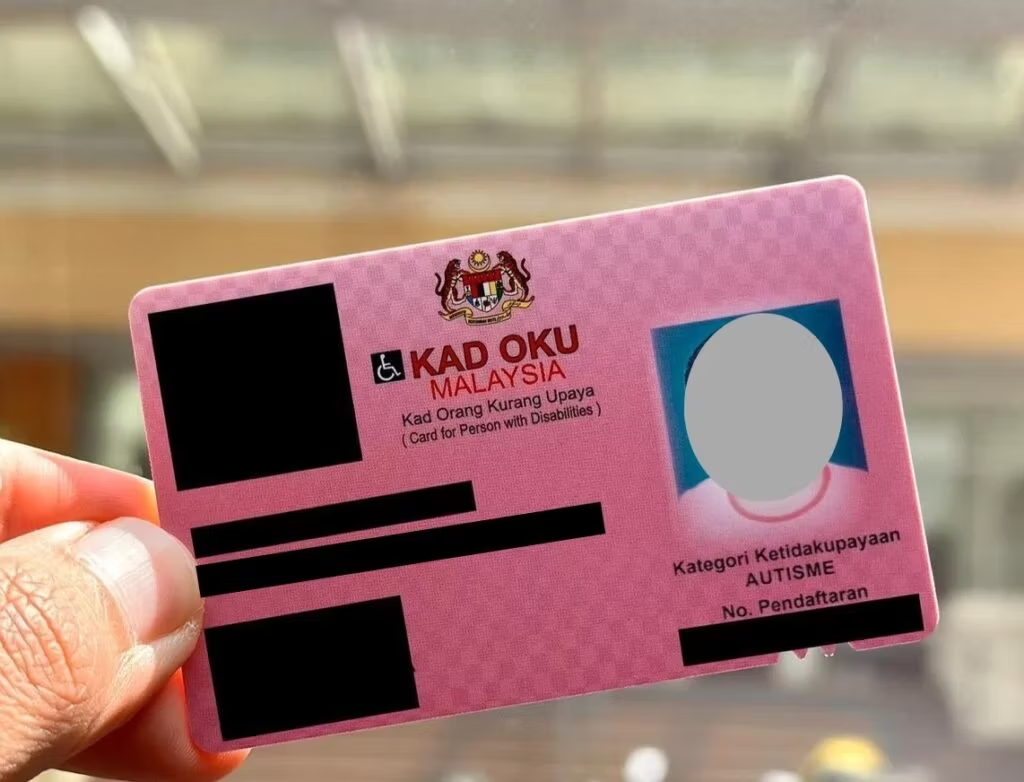
I understand why access to care is limited. The government can only plan services based on the data they have. Many families choose not to register for the OKU card because they’re worried about stigma or that their child may be labelled or rejected by certain schools. I respect that—it’s a personal choice. But families also need to understand the impact.
If children aren’t registered, the numbers don’t reflect the true prevalence of autism, and that makes it harder to justify more funding, resources and policy changes. For example, in the US, around 1 in 31 children are diagnosed with autism. In Malaysia, the figure is approximately 1 in 625. I don’t believe the difference is because America has significantly more autism. I think a large part of it comes down to data collection and identification. Everything starts with that. If the government doesn’t know how many children need support, it’s difficult for them to plan and provide the services those families need.