What started as a daily frustration with food waste turned into an award-winning composting solution, helping the local community rethink sustainability
Food waste was the problem a team of four students from SMK Khir Johari set out to tackle, starting at Taman Riah Market in Kedah. Among them were Stanislas Simon and Laxsyan Nanta Kumar, who shared how the idea came to life. At first, the team explored several possible solutions, but many felt short-term. Composting, however, stood out as something more sustainable.
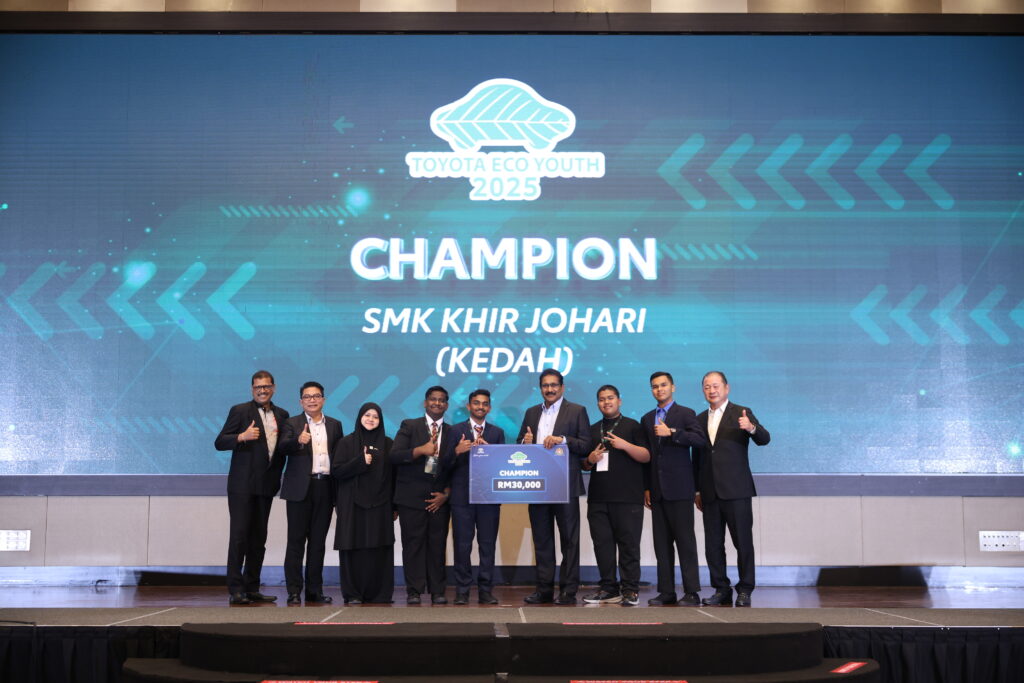
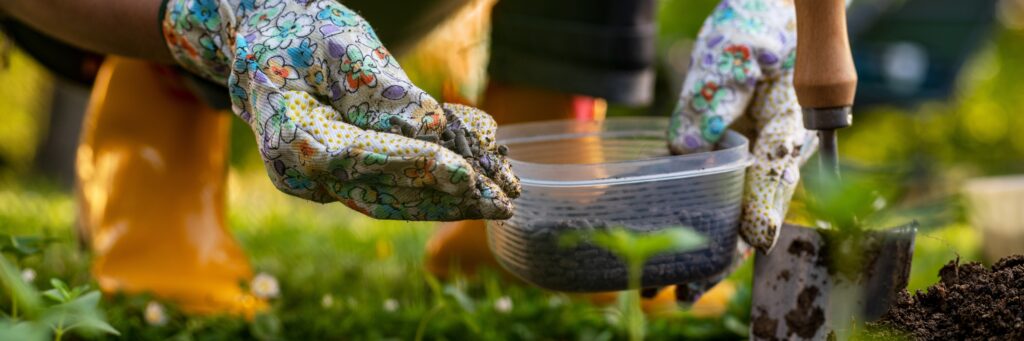
It offered a long-term way to manage food waste rather than letting it end up as rubbish. That belief became the foundation of their project that would eventually lead them to the Toyota Eco Youth 2025 championship. At the heart of it is their Eco-Compost Smart Bin, designed to speed up the composting process from months to just a few weeks, by creating the right conditions for food waste to break down quickly into fertiliser.
To understand how a simple idea grew into an award-winning solution, we spoke to Stanislas, Laxsyan, and their teacher, Mr Sandra Gesan A/L Balakrishnan, who also received the Most Supportive Teacher award at TEY 2025.
1Twenty80: Congratulations on being named the TEY 2025 Champion! How does it feel to have your hard work recognised at the national level?
Laxsyan: It feels incredible. We still can’t believe we became the champion. Our team worked really hard over six months, and seeing everything pay off feels amazing. From building the composting machine to getting the community at Taman Riah Market involved, everyone gave their best. We’re really proud and grateful that our teamwork and passion brought us this far.
Stanislas: TEY believed in our potential, and that trust led us all the way to the championship. We’re truly proud and grateful for this journey.
1Twenty80: Composting isn’t yet common in Malaysia. Was it hard to change people’s mindset or get them to see food waste as something useful, not just ‘rubbish’?
Stanislas: It was very hard, honestly. It was the biggest challenge. Some in the local community didn’t understand how small changes can grow over time. They would say, “If only 1% of food waste is reduced tomorrow, what’s the point?”
But after we conducted awareness talks and workshops, they started to understand our idea. They became interested in our Eco Compost Smart Bin and were willing to continue the project with us.

1Twenty80: What was the hardest part about developing or testing it?
Stanislas: For me, the hardest part of the whole project was the coding and developing the bin. In coding, even a small mistake (like one dot) can cause everything to stop working, including the sensors. It took me almost two months just to complete the coding. During the early stages, developing and testing the bin was also very challenging. I wanted to give the microorganisms what they needed, but at the beginning, I didn’t have heaters or a water-sprinkling system, because I hadn’t thought of those yet. We really started from scratch.
Laxsyan: For me, one of the biggest challenges was at Taman Riah Market, which was our project area. At first, the local authority didn’t allow us to carry out composting activities there. So what we did was build a nursery in our school to test the effectiveness of our fertiliser. Fortunately at the same time, we received strong support from our teachers throughout the competition, and we also started getting cooperation from the community at Taman Riah Market.
1Twenty80: How does it feel to see your compost being used to grow vegetables, knowing that it contributes to cleaner soil, safer food, and a healthier community?
Stanislas: We feel very proud. The locals now trust us, and they can see that it’s working and showing real results. We’ve helped make the market a cleaner environment, and we’re very proud of that.
Laxsyan: Our project was inspired by a simple problem we saw every day. In school canteens, there’s always food waste around the sinks and on the floor, and cats would come to eat the leftovers. The leftovers also caused bad smells and attracted pests. Seeing this made us want to find a better way to manage food waste. That’s why we created the composting machine—to turn waste into something useful, instead of letting it go to waste. Our main goal was to reduce food waste, and show that even students can take action to protect the environment and the community.
1Twenty80: What kind of feedback have you received from the community so far?
Stanislas: The community told us that even if we, as students, stopped the project one day, they would want to continue it themselves. They said they can already see a difference in the amount of food waste. They believe that within the next few months or a year, food waste in the area could be greatly reduced using our Eco Compost Smart Bin.
1Twenty80: How did you all stay motivated and keep things running smoothly?
Stanislas: I think the biggest reason our teamwork worked so well is Mr Sandra. Whenever we felt tired, overwhelmed, or thought about giving up, he would tell us, “No, guys. Keep going! You’re almost there.” He was always cheering us on until we believed we could finish the project and really make a difference.
Laxsyan: Teamwork was really the heart of the project. Each of us had different strengths—some were good at designing, others at research or talking to people—so we made sure everyone had a role they enjoyed. There were stressful moments, especially when deadlines were close for milestone submissions, but we always encouraged each other and tried to stay positive. We also joked around, shared ideas, and reminded ourselves why we started this project in the first place. That’s what kept us going throughout the competition.
Mr. Sandra: I follow one principle in this project, based on an African proverb: It takes a whole village to raise a child. This project was never about one or two people—it took a whole team to lift these students up. That’s why I involved many students and teachers in supporting them. I delegated other roles such as videography, photography, vlogging, technical support, and nursery work to other students and teachers, including those from the Kelab Alam Sekitar. Without this wider support from our school community, I don’t think the project would have been successful.
Another important goal for me was knowledge spillover. I wanted the experience and skills gained from this project to reach other students too, so that when these boys graduate after Form 5, there will be others who can continue the work. Toyota emphasises sustainability, not projects that stop after winning a title, so building a team that can carry this forward was very important.
1Twenty80: Has this journey inspired you to pursue something related to science, the environment, or even community health in the future?
Stanislas: Totally. I learned so much along the way. At the start, I didn’t even know what coding, microprocessors, or sensors were—but now, I feel much more confident with them. I’ve always liked science, and this project really opened my eyes to how much more there is to explore.
Laxsyan: Usually, as students, we don’t enjoy exams, but this project showed us that science isn’t just about books or tests, because it’s all around us. Seeing our composting machine actually work, and the community respond so positively, were amazing. It sparked our curiosity about what more we could do for the environment and showed us that even small efforts can make a real difference. That’s a lesson that will stick with us.
Mr. Sandra: Many Gen Z students respond better to project-based learning than rote memorisation—it engages them in a way traditional methods often can’t. That’s why this project worked so well. The boys put their hearts into it, and their Eco-Compost Smart Bin may be one of the first of its kind. It uses Wi-Fi, microprocessors, and a programme they coded themselves. With all the attention the project has received, they’re even exploring the possibility of patenting it.
1Twenty80: How important do you think collaboration is in solving real-world problems like waste management?
Laxsyan: We realised very early on that we couldn’t do everything ourselves, as we’re still students, and we also have other responsibilities. Working with others made a huge difference. Everyone contributed in their own way, and it was really nice to see how different efforts came together like puzzle pieces. That’s when we understood that solving big problems like waste management isn’t about one group doing everything—it’s about everyone working together.
Stanislas: As students, when we speak up, sometimes they don’t fully believe in us. They’ll think, ‘They’re just students, this project won’t really work,’ but with the help of our collaborators, we were able to prove otherwise. We conducted awareness talks, workshops, and even taught market vendors how to separate food waste. That really made an impact.
Mr. Sandra: Collaboration is essential when addressing real-world challenges like waste management. This project would not have been possible without support from partners who provided technical guidance, community access, and credibility. What mattered most was showing the students that real change doesn’t happen in isolation. When different groups come together—educators, industry, and the community—solutions become stronger and more sustainable. That’s also how we ensured this project wouldn’t stop after winning, but could continue growing beyond the competition.
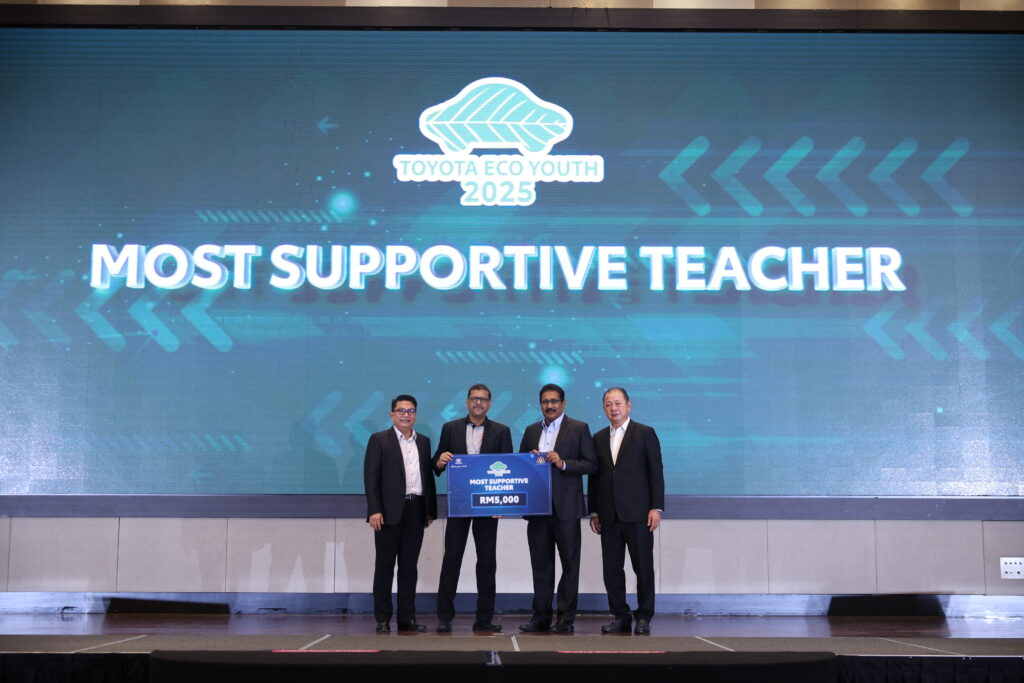
1Twenty80: Your teacher also won Most Supportive Teacher! How has his mentorship shaped the way you approach problem-solving and teamwork?
Stanislas: As mentioned earlier, he was really the backbone of our teamwork and discipline. He kept cheering us on until we believed in ourselves. Honestly, without him, I don’t think we could have won first place.
Laxsyan: Mr. Sandra truly deserved the award. He taught us how to stay calm under pressure, think creatively, and work together even when things got stressful. He laughed with us through the chaos and kept reminding us that teamwork was the real secret behind this project.
Mr. Sandra: Winning TEY 2025 was the real pinnacle. The Most Supportive Teacher award was honestly just a bonus. I live by one principle: for every problem, there is a solution. That belief comes from my own cancer journey. I’m a cancer survivor, and I’ve learned that no challenge is too big when you face it with the right mindset.
Throughout this project, I gave the boys a lot of freedom. I told them, “Try to solve things yourselves. Only come to me when you hit a dead end.” But honestly, they rarely did. Stan focused deeply on innovating the smart bin, while Laxsyan handled planning and documentation. They were incredibly independent.

1Twenty80: What’s the biggest lesson you’ve learned about sustainability and health from this experience?
Laxsyan: We realised that sustainability and health are like the ultimate power duo, like peanut butter and jelly, but greener! We learned that turning food waste into compost doesn’t just help the planet, but also stops the school from smelling like yesterday’s canteen lunch.
We realised that being eco-friendly isn’t about doing huge, complicated things., but adopting small habits that make life cleaner and healthier. Now we joke that we’re not just saving the Earth—we’re also saving our noses and our sanity.
Stanislas: At the beginning, people were skeptical. But now, we’ve proven that even small steps can lead to something bigger. The environment is cleaner, the community can see the difference, and they’re even asking for a bigger-capacity bin. Reducing waste really does improve health. Most importantly, this project showed us that young people can lead real change.
Mr. Sandra: For me, it’s a matter of conscience. I worry about the next generation living in a world with so many environmental challenges. I grew up in a much greener time.
Projects like this may not solve everything, but they help to create a healthier environment and a better future. Winning has motivated us to scale up the project, expand community engagement, and keep it going. That’s what sustainability truly means.