Because breast cancer in men isn’t widely discussed, many cases are diagnosed late. An oncologist shares what every man should know.
“It could never happen to me.”
Until one day, you’re sitting across the desk from an oncologist, struggling to process a diagnosis you never imagined could apply to you, especially as a man.
That disbelief is exactly why breast cancer in men often goes unnoticed and is diagnosed late. To shed light on this overlooked issue, we spoke to Dr Matin Mellor, a consultant in clinical oncology at OncoCare Malaysia, Thomson Hospital Kota Damansara, who has been in practice for over 30 years. He breaks down the symptoms men ignore, the role of genetics, and the importance of early self-checks.
1Twenty80: Why do breast cancer cases in men often go unnoticed or get diagnosed later?
Dr Matin Mellor: Male breast cancer tend to present later than female breast cancer, and there are several reasons for this:
- Breast cancer is widely perceived as a women’s disease, so many men dismiss symptoms, believing it simply cannot happen to them.
- There is a general lack of awareness about male breast cancer, including its signs and symptoms.
- Embarrassment also plays a role, as some men feel uncomfortable seeking help for a condition associated with women.
- Unlike women, men are not part of any routine breast cancer screening programmes, which further contributes to later diagnosis.

1Twenty80: What usually pushes men to finally get something checked when it comes to breast cancer symptoms?
Dr Matin Mellor: Most men eventually seek medical attention when their symptoms fail to improve despite trying non-specific or inappropriate treatments. Many experiment with traditional remedies or advice from friends, but a breast lump will not go away without proper cancer-specific treatment. In fact, it usually worsens. When the lump becomes larger or more painful, they finally present to the appropriate healthcare services—often at a later stage because of these delays.
1Twenty80: What are some common misconceptions that delay their diagnosis?
Dr Matin Mellor: The most common misconception is that breast cancer is exclusively a woman’s disease and therefore cannot affect men. This is compounded by a lack of public awareness and limited knowledge of breast cancer symptoms in men. These misunderstandings lead many men to ignore early warning signs.
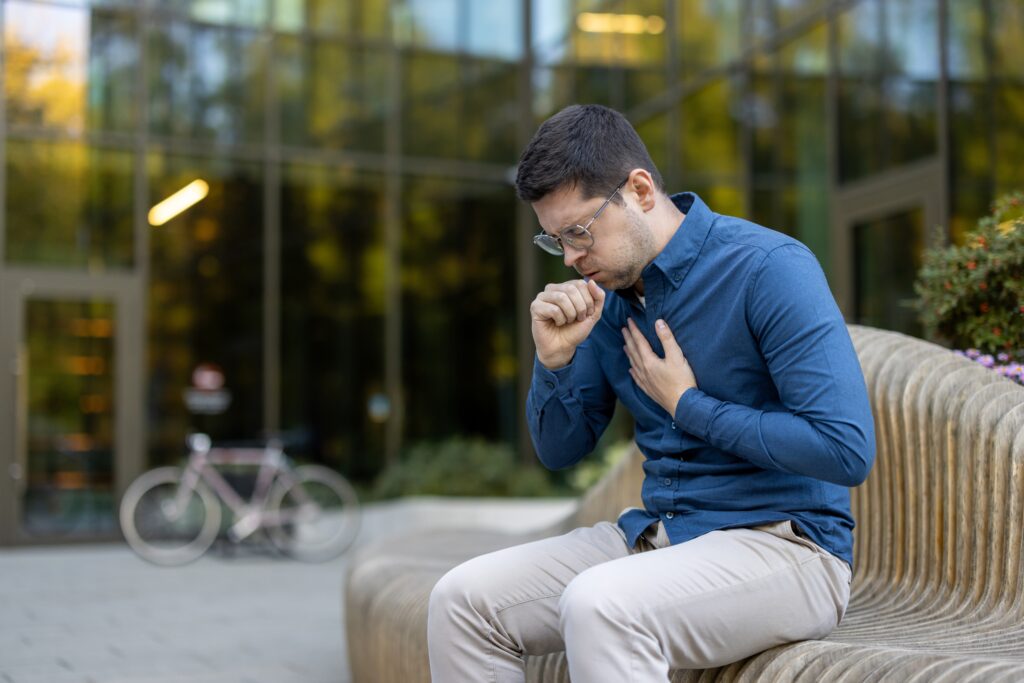
1Twenty80: What symptoms should men be aware of?
Dr Matin Mellor: The most common symptom is a lump in the breast. If ignored, the lump can grow larger and spread in different directions. When it spreads towards the skin, it may infiltrate it, leading to skin changes, ulceration, bleeding, discolouration, or even erosion of the nipple. If it spreads deeper, it can invade the chest wall muscles, causing pain and discomfort.
If the cancer spreads to nearby lymph nodes, particularly under the arm on the same side, lumps may appear there. In advanced stages, it can spread to other parts of the body. Spread to the lungs may cause cough or breathlessness; spread to the bones can cause significant pain; and spread to the brain can result in weakness, changes in movement, or alterations in mental function. These symptoms usually indicate very late-stage disease.
1Twenty80: How much do genetics play a role? How should men with BRCA mutations or a strong family history approach their own risk?
Dr Matin Mellor: Men with a strong family history of breast or ovarian cancer should consider genetic testing for BRCA mutations—specifically BRCA1 and BRCA2. BRCA2, in particular, is more strongly associated with male breast cancer.
If a man is found to carry a BRCA mutation, screening mammography is recommended from the age of 35, or 10 years earlier than the age at which the youngest affected family member was diagnosed. In addition, they should undergo annual clinical breast examinations, perform regular self-examinations, and be educated about the signs and symptoms of breast cancer so they can seek medical advice promptly if concerns arise.

1Twenty80: Can you walk us through what male breast cancer actually looks like biologically?
Dr Matin Mellor: Men do have a thin layer of breast tissue located behind the nipple. This tissue can become cancerous and may present in various ways, depending on how advanced the disease is. Symptoms can include a lump, swelling, skin changes, discolouration, or bleeding. If the cancer spreads to lymph nodes or other organs, symptoms will reflect the areas affected.
1Twenty80: Are there major differences in how breast cancer is treated in men versus women?
Dr Matin Mellor: No, in fact the management of breast cancer in men is exactly the same as in women. The main difference is that male breast cancer often presents at a later stage, which can affect outcomes.
1Twenty80: In what ways have newer technologies improved outcomes for male breast cancer patients?
Dr Matin Mellor: Advances in technology have improved breast cancer outcomes overall, particularly through earlier detection, more effective treatments, and better disease management. However, the survival benefits are more evident in women because men still tend to present later.

1Twenty80: What are some emotional or psychological barriers male patients commonly face when they receive a breast cancer diagnosis?
Dr Matin Mellor: Of course, many male patients experience disbelief and embarrassment, as breast cancer is not commonly associated with men. Anxiety and fear are also common, particularly regarding treatment side effects such as chemotherapy and hair loss. Depression can occur early on, along with significant psychological distress due to uncertainty about the future.
Another challenge is unmet information needs. Because male breast cancer is rare, many men are unfamiliar with the disease, its stages, and expected outcomes. This lack of accessible information can make it harder for them to process their diagnosis and understand what lies ahead. These emotional responses, however, are not unique to men and are common among anyone newly diagnosed with cancer.
1Twenty80: Do you feel breast cancer in men is under-studied?
Dr Matin Mellor: In literature, because male breast cancer is rare, there are fewer studies focused exclusively on men. Most research and clinical trials are conducted in women, as it is difficult to recruit enough male patients for dedicated trials. As a result, treatment advances are largely based on data from female breast cancer, although these treatments are still applicable to men.

1Twenty80: What would you say to men who believe breast cancer could never happen to them?
Dr Matin Mellor: Breast cancer in men is rare, but it does happen. The lifetime risk is approximately 1 in 750 men, and male breast cancer accounts for about 0.5 – 1% of all breast cancer cases. Based on Malaysia National Cancer Registry (MNCR) Report (2017-2021), the data translates to an estimated 80 to 160 cases nationally. While uncommon, it is certainly possible, and awareness is crucial.
1Twenty80: If you could get every man to self-check for just one thing during their daily routine, what would it be?
I would ask men to check two things: their breasts and their testes. Both can be easily examined during a daily shower. Testicular cancer, in particular, is a male-specific cancer and often presents as a painless lump, making self-examination a simple yet effective habit.